- THE GLOBAL HUSTLR
- Posts
- HORMUZ BLOCKADE = HIGHER OIL & STICKIER INFLATION
HORMUZ BLOCKADE = HIGHER OIL & STICKIER INFLATION

The Global Hustlr
March 29, 2026

👋 Hey Hustlrs,
Welcome back to The Global Hustlr Weekly Update.
Every week, I recap the U.S. market through a momentum lens to help you see what’s working and what it means for the week ahead.
Today’s edition breaks down what truly moved markets, why it matters for your long‑term wealth and how to stay positioned as an African investing in US assets even when the world feels chaotic.
Let’s dive in.

QUICK BREW: THE WEEK AT A GLANCE
U.S. stocks extended their slide
Iran's Hormuz Blockade Is Tightening, Not Loosening
Inflation fears came back
Global trade and tariff risk stayed elevated
Consumer Confidence Cracks Under Gas Prices
THE BIG STORIES
1) Market Slide
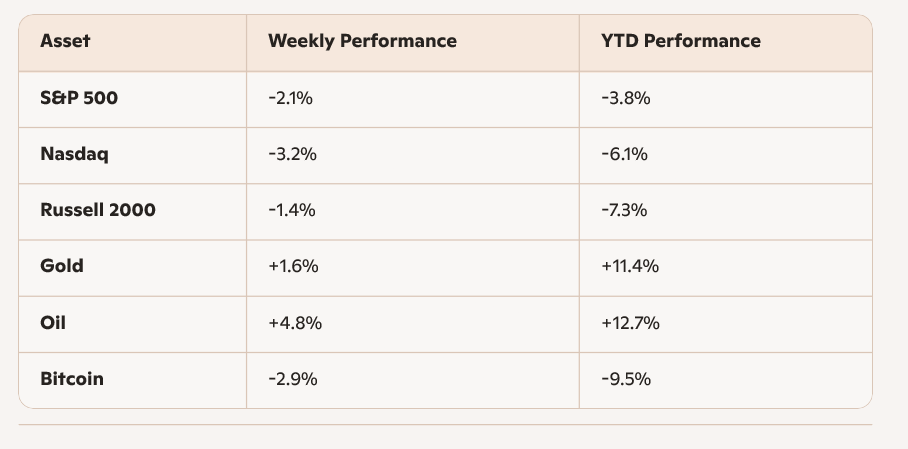
U.S. stocks kept falling and it was clear to see. The S&P 500, Nasdaq, and Russell 2000 all ended the week lower as investors pulled back on risk. This wasn’t just about tech; it was a wider change in mood. In times like these, confidence is just as important as the numbers.
Key point: If you invest in U.S. ETFs from Africa, a weak market can hit your returns. Try to diversify more during weeks like this to help manage the ups and downs.
INDEX, COMMODITIES AND ASSET CLASS WEEKLY PERFORMANCE
2) Hormuz Tension
The Strait of Hormuz remained a key topic, putting oil back in the spotlight for traders. Any trouble in that area quickly affects oil prices because so much supply passes through it, this led to more ups and downs in energy and made investors more cautious overall. Geopolitics wasn’t just in the background this week; it was a main factor in prices.
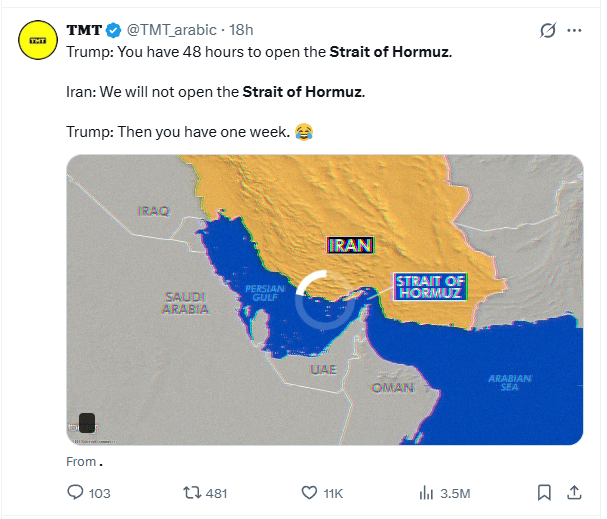
Key takeaway: Oil shocks affect more than just energy, they can influence inflation, bond yields, and the cost of growth stocks. Keep an eye out for these wider effects.
3) Inflation Fear
Inflation worries returned in a big way. Rising oil prices made investors doubt if price pressures are really under control. This kept bond markets cautious and made stocks that react to interest rates less appealing. The market is still watching closely for anything that could slow down Fed rate cuts.
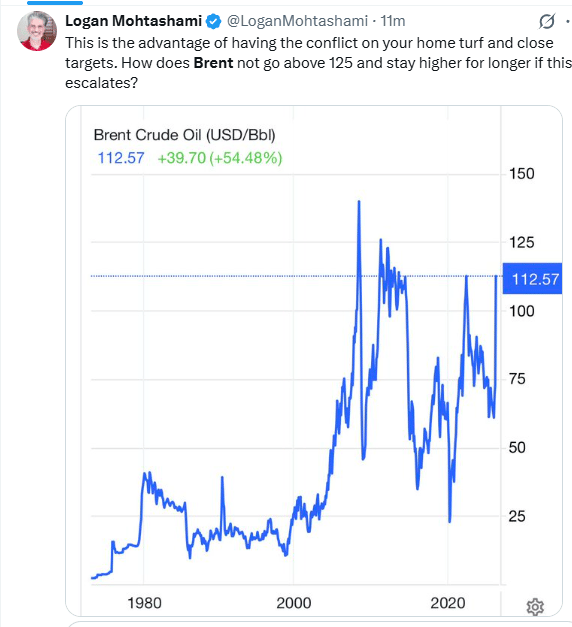
Main takeaway: Ongoing inflation is tough on growth stocks, whether you invest in U.S. or global markets. Keep a close watch on inflation when managing your portfolio.
4) Trade Risk
Trade and tariff risks stayed high, making the global outlook uneasy. Markets dislike uncertainty, especially when it affects supply chains, profits, and international demand. Even without a big crisis, extra risk remains. This often shows up first in cyclical stocks and companies that rely on exports.
Takeaway: Trade tensions impact both global and local markets. Check your portfolio’s sector mix if you invest across the U.S., Europe, and emerging markets.
SECTOR MOVES: WINNERS & LOSERS
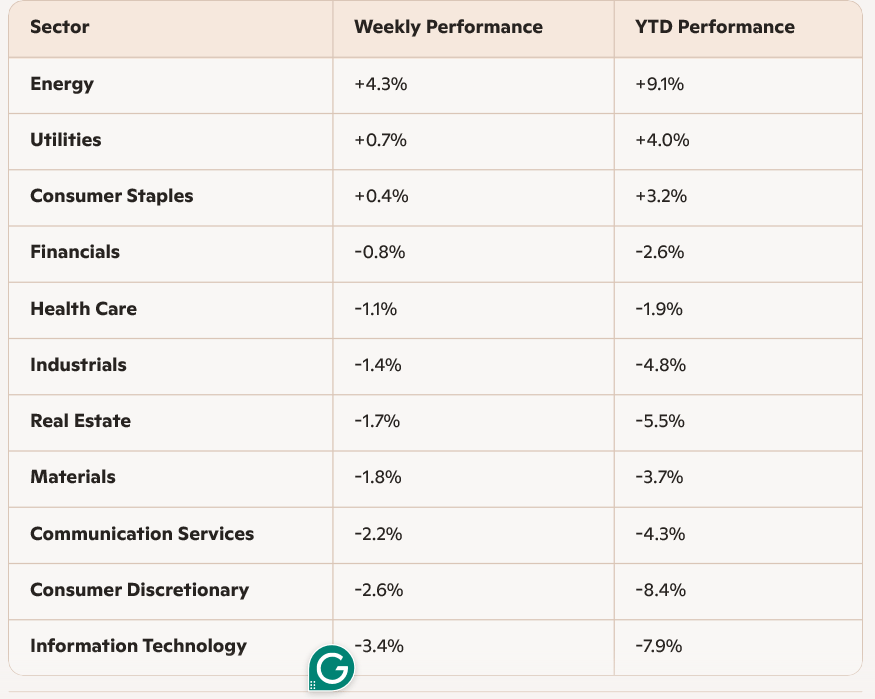
Let’s take a step back and think about what these changes mean for your investments.
This week called for discipline, not drama. Energy stocks did better, while growth and interest-rate-sensitive stocks struggled. The market still sees inflation as important, the Fed as careful and different sectors moving in their own ways.
If you invest from Africa in U.S. or global ETFs, remember to keep your portfolio balanced, choose quality investments, and pay attention to valuations. Avoid chasing last year’s top performers if oil prices and inflation are going up.
COMING WEEK PREVIEW: WHAT TO WATCH NEXT
Next Week: Jobs, Inflation Clues, and More Earnings Noise
For 30 March to 3 April 2026, keep an eye on jobs data, inflation updates, and any new comments from the Fed. Oil prices will still be important. If they stay high, bond yields and sector trends could change quickly.
Also, watch for earnings reports from big tech, consumer and industrial companies, what they say about the future could be more important than the actual numbers.
FINAL SIP
Stay disciplined. Stay curious. Wealth is built by showing up consistently not by chasing every headline. This is a long game, not a quick hustle.
JOIN THE MOVEMENT
If this was forwarded to you, hit subscribe and plug into the community of African professionals building global wealth with clarity and confidence. Share this with one friend who’s serious about levelling up financially.
You’re not just reading, you’re part of a movement rewriting what global investing looks like for Africans everywhere.
This newsletter is strictly educational and not investment advice. The content provided does not constitute personal advice or a personal recommendation. No content should be relied upon as constituting personal advice or a personal recommendation when making your decisions. If you require any personal advice or recommendations, please speak to an independent qualified financial adviser.
Reply